FX TRADING COSTS EXPLAINED
FX trading costs such as the spread, commissions, swaps, and slippage can significantly influence trading results. Learn how each cost works and how to minimise them.



When trading currencies on the foreign exchange (FX or forex) market, traders encounter several types of costs that can directly impact their performance and profitability. Understanding these costs is crucial whether you’re a day trader, swing trader, or long-term investor.
Forex trading costs fall into four primary categories:
- Spread: The difference between the bid and ask prices.
- Commission: A fixed or percentage-based fee charged per trade.
- Swaps (or rollover fees): Interest payments for holding positions overnight.
- Slippage: Price differences between the expected and actual execution price.
All four of these costs may apply in a single trade and, when accumulated, they can take a substantial bite out of returns, particularly for high-frequency or highly leveraged traders. Brokers may advertise themselves as offering "commission-free trading," but hidden in these offers are broader spreads or other costs.
This article breaks down each major cost category, highlighting how they occur, when they become relevant, and how they can be avoided or reduced through strategic trading, broker selection, and risk management.
By understanding FX costs in detail, traders are better equipped to evaluate broker offerings, measure true profitability, and improve overall trading discipline. Let’s examine each of the four main areas of FX trading costs in detail.

Spread is the most common cost in forex trading and refers to the difference between the bid (selling) and ask (buying) prices for any currency pair. Market makers and brokers provide two quotes for each pair, and the spread constitutes the amount they earn for facilitating the trade.
Bid-Ask Spread Example
If the EUR/USD quote is 1.1000/1.1002, the spread is 2 pips. If you purchase at the asking price (1.1002) and immediately close the position at the bid price (1.1000), you’ve incurred a 2-pip loss purely from the spread difference.
Factors Affecting the Spread
The size of the spread varies depending on market conditions, the currency pair, and your broker:
- Liquidity: Major pairs like EUR/USD have tighter spreads due to liquidity.
- Volatility: During economic events or low liquidity periods (e.g., holidays), spreads widen.
- Account type: “ECN” accounts tend to offer raw spreads with a commission, while “standard” accounts may include wider spreads with no commission.
Fixed vs. Variable Spreads
Some brokers offer either fixed or variable spreads:
- Fixed spreads stay consistent and are predictable, often used by market maker brokers.
- Variable spreads change in real time with market volatility, common in ECN environments.
While tight spreads are essential for scalpers and high-frequency traders, longer-term traders may not find spreads to be the most impactful cost. However, all traders should monitor spread size, especially during news releases or low-volume hours.
How to Minimise Spread Costs
- Trade during peak market hours (e.g., London/New York overlap).
- Choose pairs with high liquidity like EUR/USD or USD/JPY.
- Use an ECN broker if you value tight spreads and can afford commission fees.
Understanding the spread helps traders plan entries and exits with better precision, particularly around key price levels where slippage and re-quotes can occur. Properly choosing spreads that align with your strategy is foundational to consistent performance in FX trading.
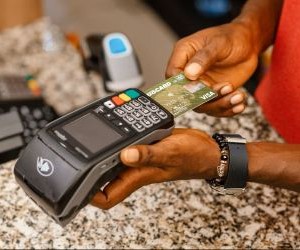
Commissions are another standard FX cost, especially with ECN (Electronic Communication Network) trading accounts. In these setups, brokers provide raw market spreads but charge a fixed or per-lot fee for executing trades. This structure gives greater transparency and often leads to fairer execution for experienced traders.
Understanding Forex Commission Structures
Forex commissions are typically charged in the following formats:
- Per trade: A fixed amount (e.g., $7 round-trip per 1 standard lot).
- Per million: Institutional accounts may see charges based on volume traded per million USD or EUR.
A “round-trip” refers to the total commission charged for opening and closing a position. For example, if the broker charges $3.50 per side, the total cost for both sides will be $7 per trade. Retail traders should calculate the net profitability of trade strategies after accounting for these fees.
Swaps and Rollover Fees
Swap or rollover fees are charged when a forex position is held open overnight. These are based on the interest rate differential between the two currencies in the pair and the size of the position. The cost—positive or negative—is reflected as either a debit or credit in your trading account.
For example, if you're long on AUD/JPY and the Australian interest rate is higher than Japan’s, you may earn a swap. Conversely, going short may incur a cost. Swaps are applied at the broker’s cut-off time (often 5 p.m. New York time), and triple swaps are usually charged on Wednesdays to account for weekend settlement.
How Swaps Impact Strategy
These ongoing costs are especially important for swing and position traders holding trades for days or weeks. A negative swap can erode profits quickly, while a well-structured carry trade—which capitalises on interest rate differentials—can be profitable over time.
Hidden Forex Costs to Monitor
- Inactivity fees: Charged if you don’t trade over a specific period.
- Withdrawal fees: Some brokers charge for bank transfers or specific payout methods.
- Conversion costs: If your base currency differs from the quote currency, currency conversion may apply upon deposit or withdrawal.
To minimise these costs:
- Read the broker’s fee breakdown thoroughly before opening an account.
- Use a swap calculator to preview potential overnight costs.
- Maintain an active account and optimise your deposit/withdrawal methods.
Understanding commissions and swaps helps traders make optimal decisions based not only on trade setups but also cost efficiency. Strategically selecting position size, leverage, and timing around rollover windows will go a long way in enhancing profitability.